
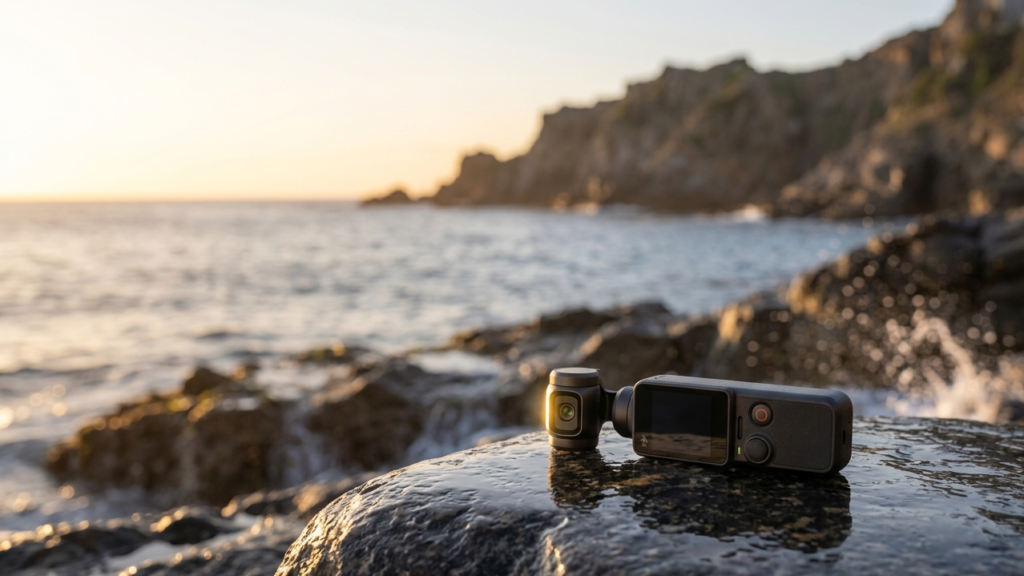
The wait is finally over. On April 16, 2026, DJI officially pulled back the curtain on the Osmo Pocket 4. For over two years, the Pocket 3 reigned supreme as the king of vlogging cameras, but the Pocket 4 has arrived to push those boundaries even further.
If you are a content creator, a traveler, or a filmmaker, you know that the “Pocket” series changed the game by putting a stabilized, professional-grade sensor in your pocket. But is the Pocket 4 worth the upgrade? Let’s dive into the details of the most advanced handheld gimbal camera ever made.
1. The Heart of the Beast: 1-Inch CMOS Sensor Redefined
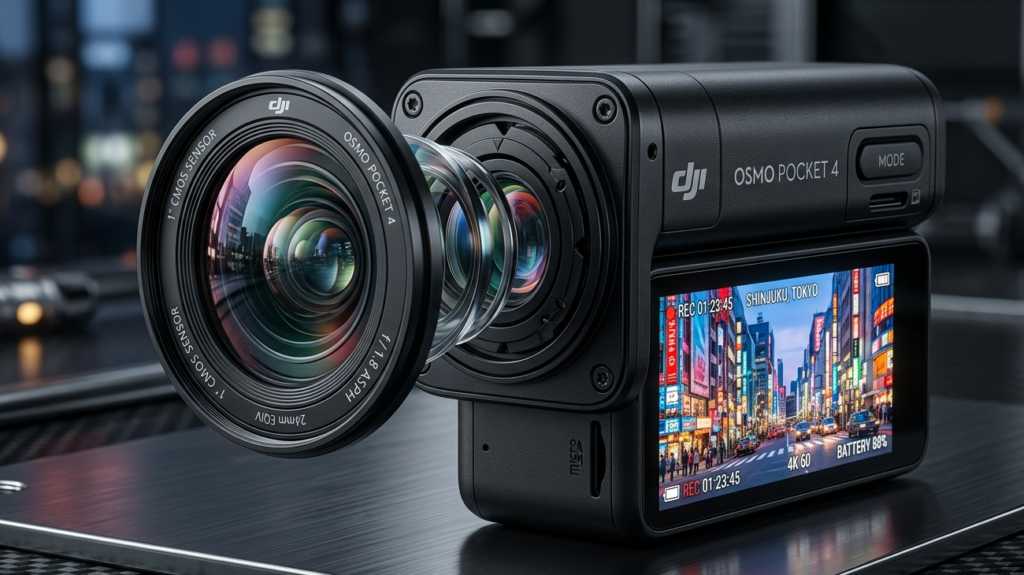
While the Pocket 3 already had a 1-inch sensor, the Osmo Pocket 4 features a next-generation 1-inch CMOS sensor with an f/2.0 aperture.
What’s new in the image quality?
- 14 Stops of Dynamic Range: This is a massive jump. It allows you to capture detail in the brightest highlights and deepest shadows simultaneously—perfect for sunrise or sunset shoots.
- 4K at 240fps: For the first time in a pocket gimbal, you can record 4K in 240fps slow motion. The Pocket 3 was capped at 120fps. This means your “epic” slow-mo shots just got twice as smooth.
- 10-bit D-Log M & HLG: Professional colorists will love the rich color data, making post-production grading a breeze.
2. Design Upgrades: More Control, Less Menu Diving
At first glance, it looks like its predecessor, but DJI has listened to user feedback regarding physical controls.
- The 5D Joystick: A new tactile joystick allows for precise gimbal movements (Pan, Tilt, and Recenter) without needing to touch the screen.
- Dedicated Zoom Button: No more fumbling on the touchscreen to zoom. There is now a physical button to toggle between 1x and 2x lossless zoom (and up to 4x digital zoom).
- 1000-Nit OLED Screen: The 2-inch rotatable screen is now significantly brighter, making it easy to frame your shots even under the direct midday sun.
3. The End of “SD Card Full” Drama
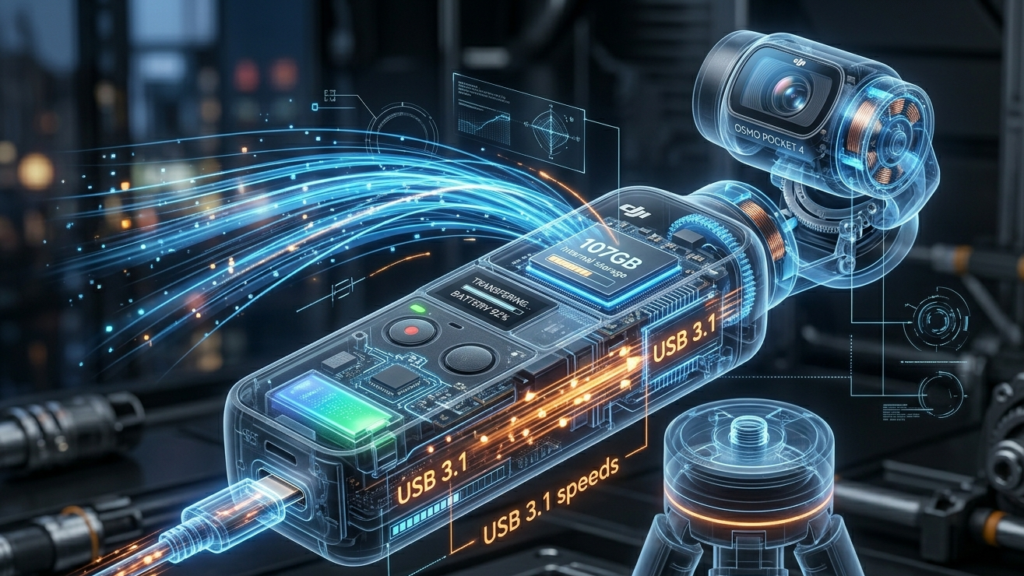
One of the most surprising and welcome upgrades is the 107GB of built-in internal storage.
You no longer have to rely on a microSD card for a quick shoot. Furthermore, the Pocket 4 supports USB 3.1 wired transfers, reaching speeds of up to 800MB/s. You can move an entire day’s worth of 4K footage to your laptop in seconds.
4. ActiveTrack 7.0: AI That Never Loses You
Tracking technology has taken a massive leap with ActiveTrack 7.0. The camera’s AI can now recognize and lock onto:
- Humans and Pets (Cats/Dogs).
- Vehicles (Cars/Motorcycles).
- Registered Subject Priority: You can “register” your face in the app, and the camera will prioritize focusing on you even if other people walk into the frame.
5. Battery and Charging: Ready in Minutes
DJI knows creators don’t have time to wait.
- Fast Charging: You can charge the Pocket 4 to 80% in just 18 minutes.
- Battery Life: On a full charge, it delivers up to 240 minutes of recording time (at 1080p/24fps). Even at 4K, it comfortably outlasts the previous model.
6. Audio Excellence: OsmoAudio
The Pocket 4 introduces 4-channel audio output. It features built-in high-quality microphones that can record omnidirectional sound with noise reduction. It also connects directly (no dongle needed) to the DJI Mic 2 transmitters for a professional wireless setup.
7. Comparison: Pocket 3 vs. Pocket 4
| Feature | DJI Osmo Pocket 3 | DJI Osmo Pocket 4 |
| Max Slow-Mo | 4K @ 120fps | 4K @ 240fps |
| Dynamic Range | 12 Stops | 14 Stops |
| Internal Storage | None | 107GB Built-in |
| Transfer Speed | USB 2.0 | USB 3.1 (800MB/s) |
| Tracking | ActiveTrack 6.0 | ActiveTrack 7.0 |
| Screen Brightness | 700 Nits | 1000 Nits |
| Charging (0-80%) | 16-32 Mins | 18 Mins |
8. Price and Availability (India & Global)
- Global Price: The Standard Combo starts at $769 / €519.
- India Price (Expected): Around ₹45,999 – ₹52,000 for the standard kit.
- Availability: Orders are starting today in the UK and Europe. In the US, availability is slightly delayed pending final FCC authorization but is expected within weeks.
Final Verdict: Should You Buy It?
If you are still using a Pocket 2 or an older action camera, the Osmo Pocket 4 is a monumental upgrade. If you already own a Pocket 3, the decision is harder. You should upgrade ONLY IF you need:
- Extreme Slow Motion (240fps).
- Internal Storage (for those times you forget your SD card).
- Better Visibility in bright sunlight.
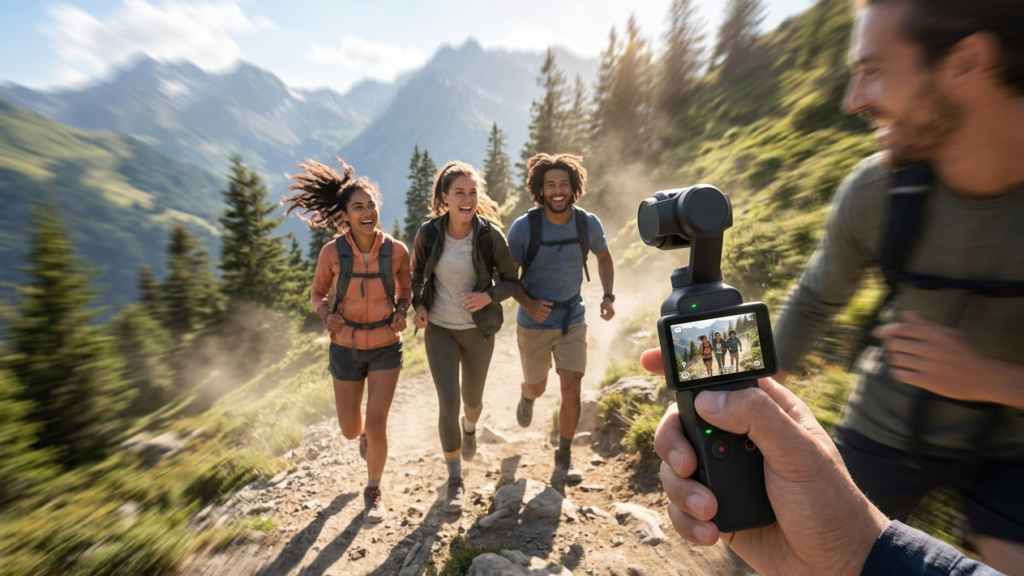
The DJI Osmo Pocket 4 isn’t just a camera; it’s a complete production studio that fits in your jeans. It’s officially the new benchmark for handheld cinematography.